
Professional Resp/Ethics · 1st Edition
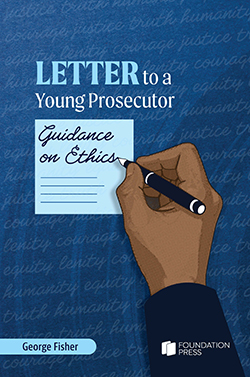
Letter to a Young Prosecutor: Guidance on Ethics - 1st Edition - George Fisher
Product details
Description
Letter to a Young Prosecutor: Guidance on Ethics 1st Edition George Fisher
ISBN: 9781642422597
Letter to a Young Prosecutor provides practical ethical guidance for prosecutors in the early stages of their careers, particularly those in their first and second years of practice. Drawing on his own experiences and ethical missteps as a young prosecutor, the author seeks to help new attorneys avoid similar mistakes and navigate the professional challenges of prosecution.
The author explains that many ethical failures do not result from a lack of knowledge of professional conduct rules or constitutional requirements, but rather from the desire to succeed and the reluctance to challenge senior colleagues. A central theme of the book is therefore the importance of maintaining one's ethical principles and resisting pressure to compromise them.
The book opens with a prologue titled "On Regret," which emphasizes the lasting consequences of failing to do what is right. Reflecting on his own experience of not challenging superiors who advocated for an unjustly harsh outcome, the author encourages young prosecutors to make principled decisions they can stand behind throughout their careers.
The main text is divided into three units. The first, "First Principles," explores the prosecutor's fundamental responsibility to seek justice. The author translates this broad obligation into practical guiding principles, including prioritizing truth, confronting bias, exercising leniency, following established rules, treating others with humanity, and standing firm when ethical challenges arise. Particular attention is given to the importance of resisting pressure to compromise professional standards.
The second unit, "Professional Relations," examines the ethical responsibilities prosecutors have when interacting with police officers, crime victims, witnesses, defense attorneys, defendants, judges, support staff, supervisors, and the wider community. Topics include maintaining appropriate professional boundaries with law enforcement, holding police accountable, responding to incompetent defense counsel, and addressing ethical disagreements with office superiors.
The final unit examines a prosecutor's ethical obligations throughout the criminal justice process, from the initial charging decision through sentencing. It brings together the applicable professional conduct rules, constitutional requirements, and broader ethical principles governing each stage of a criminal prosecution.
The book concludes by asking, "Should Good People Be Prosecutors?" The author challenges the belief that the criminal justice system inevitably undermines idealistic young attorneys and highlights both the considerable challenges and the meaningful responsibility of pursuing a career dedicated to seeking justice.
An accompanying author overview is also available, offering additional insight into the book's central themes and guidance.
Letter to a Young Prosecutor: Guidance on Ethics 2026 1st Edition George Fisher
ISBN: 9781642422597, 978-1642422597, 978-1-6424-2259-7, 978-1-64242-259-7
Details
- ISBN
- 9781642422597
- Edition
- 1st Edition
- Publisher
- West Academic
- Publication Date
- November 2026
Condition Guide
Every FrugalText book is graded by our receiving team before it ships. Conditions describe cosmetic state only - content is identical across tiers.
Some books, including Brand New books, carry an adhesive sticker, inside or outside. A sticker does not change a book's condition grade.
-
Acceptable
Readable throughout. Expect highlighting, margin notes, and wear on cover or spine. Best price for the same page numbers.
-
Good
Minor highlighting or notes. All pages intact. Cover shows light shelf wear.
-
Very Good
Little to no writing. Binding tight. Looks barely used.
-
Brand New
Unused and unmarked. Shrinkwrapped when available from the publisher.
-
Brand New + eBook
Brand new print copy plus the publisher's eBook and supplemental digital access, where offered.
Shipping & Returns
-
Fast, standard shipping
Most students receive their books in 3 to 9 business days.
-
Rental returns: free at semester's end, refundable within 30 days
Print a prepaid return label from your account whenever you have finished with the book, and drop it at the carrier listed on the label. Returning it by your semester return date, or after it is already overdue, is free with no deduction. Returning it early and shipping it back within 30 days of your order date gets you a refund minus a 15% restocking fee and the label cost. After 30 days, an early return is free, with no refund.
-
Purchase returns: 15% restocking fee
Purchases can be returned within 30 days in the condition you received. We will email a prepaid return label; once we receive your book, we refund the purchase price minus the 15% restocking fee and the return label cost. Original shipping is non-refundable.
-
Shipping costs calculated at checkout
Real-time rates are quoted at checkout based on your address and the books in your cart. Returning your book by your semester date is always free; an early return deducts the restocking fee and label cost from your refund instead.
You might also need
Students also rent these.
-

West Academic
Legal Ethics in a Nutshell (Nutshells)
Buy from $55.59
1 condition -

West Academic
Representing Clients: An Ethics Guide for Clinical Law Stud…
Buy from $23.96
1 condition -

West Academic
Model Rules of Professional Conduct and Other Selected Stan…
Buy from $62.30
1 condition -
West Academic
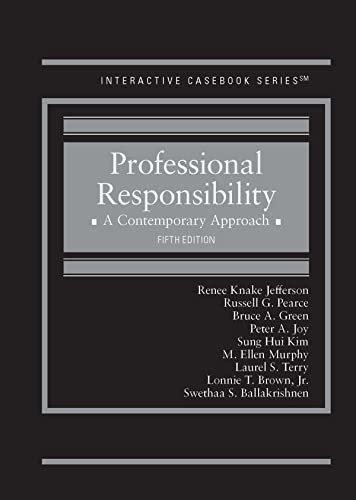
Professional Responsibility: A Contemporary Approach - 5th…
Buy from $314.99
1 condition -

West Academic
Ethical Lawyering: Legal and Professional Responsibilities…
Rent from $172.20
2 conditions -

West Academic
A Short & Happy Guide to the MPRE (Short & Happy Guides)
Buy from $24.92
1 condition