

Civil Procedure · Third Edition
Civil Procedure in Focus - Third Edition - Counseller
Product details
Description
Civil Procedure in Focus Third Edition - 9798889060628
The reader-friendly approach of this casebook provides a hands-on, experiential learning environment that can be essential to many students’ success. Simply knowing the facts of a benchmark case is not enough; knowing how to apply the doctrine from one case to a different set of facts enhances a student’s ability to succeed in and after law school. With the practice-based exercises in every chapter, students learn to apply legal principles and concepts to real-world scenarios.
Key Features:
• Case Previews and Post-Case Follow-Ups. To succeed, law students must know how to deconstruct and analyze cases. Case Previews highlight the legal concepts in a case before the student reads it. Post-Case Follow-Ups summarize the important points and ramifications but also goes one step further, noting the significance of a case to current law.
• Real Life Applications. Every case in a chapter is followed by Real Life Applications, which present a scenario similar to the facts in the case followed by a series of related questions. Real Life Applications challenge students to apply what they have learned and help prepare them for real-world practice. Professors can use Real Life Applications to spark class discussions or use them as individual short-answer assignments.
• Applying the Concepts and Civil Procedure in Practice. These end-of-chapter exercises encourage students to synthesize chapter material and apply relevant legal doctrine and code to real-world scenarios. Students can use these exercises for self-assessment, or the professor can use them to promote class interaction.
New to the Third Edition:
• Current issues regarding generative AI as it relates to Rule 11 and Discovery.
• The COVID-19 Pandemic’s effects on litigation.
• An explanation of the U.S. Supreme Court’s latest Personal Jurisdiction cases.
• A discussion of Snap Removal.
Professors and students will benefit from:
• Explanatory text on the key concepts, allowing professors to spend more class time on application of the concepts rather than explanation of basic doctrine
• Essay, short answer, and multiple-choice questions in every chapter, along with model answers in the teacher’s manual for each question.
• Exhibits containing the relevant constitutional, statutory, or rule text. • Case Previews and Follow-ups that help to frame the key issues in the case and discussion of how the holdings have developed in subsequent cases.
Civil Procedure in Focus 3rd Edition Counseller - 9798889060628 979-8889060628
Details
- ISBN
- 9798889060628
- Edition
- Third Edition
- Publisher
- Aspen Publishing
- Publication Date
- July 2024
Condition Guide
Every FrugalText book is graded by our receiving team before it ships. Conditions describe cosmetic state only - content is identical across tiers.
-
Acceptable
Readable throughout. Expect highlighting, margin notes, and wear on cover or spine. Best price for the same page numbers.
-
Good
Minor highlighting or notes. All pages intact. Cover shows light shelf wear.
-
Very Good
Little to no writing. Binding tight. Looks barely used.
-
Brand New
Unused and unmarked. Shrinkwrapped when available from the publisher.
-
Brand New + eBook
Brand new print copy plus the publisher's eBook and supplemental digital access, where offered.
Shipping & Returns
-
Fast, standard shipping
Most students receive their books in 3 to 9 business days.
-
Rental returns: free at semester's end, prorated if early
Print a prepaid return label from your account whenever you have finished with the book, and drop it at the carrier listed on the label. Returning it by your semester return date, or after it is already overdue, is free with no deduction. Returning it early, before that date, deducts a 15% restocking fee and the label cost from your refund.
-
Purchase returns: 15% restocking fee
Purchases can be returned within 30 days in the condition you received. We will email a prepaid return label; once we receive your book, we refund the purchase price minus the 15% restocking fee and the return label cost. Original shipping is non-refundable.
-
Shipping costs calculated at checkout
Real-time rates are quoted at checkout based on your address and the books in your cart. Returning your book by your semester date is always free; an early return deducts the restocking fee and label cost from your refund instead.
Rental Terms
Return by December 28, 2026 for Fall 2026 rentals.
- Late Fees
- Books returned after the semester deadline accrue a weekly late fee of about 10% of the book's Brand New price, for each copy that is overdue. The rent you have already paid counts toward the book's replacement value (its Brand New price), so late fees stop once your rent plus late fees reach it. That replacement value is the most a rental can ever cost you. We email a reminder 48 hours before any charge, and any late fees are charged to the payment method you save at checkout.
- Damage Fees
- Books returned damaged beyond normal classroom wear may be assessed a damage fee, capped at the book's replacement value (its Brand New price). Any damage fees are charged to the payment method you save at checkout after we inspect the returned book.
- Return Shipping
- Returning your book is free with no deduction if it reaches us by your semester return date, or after it's already overdue. Print a prepaid label (USPS or UPS, whichever is cheaper for your package) from your account's My Rentals page. Returning it EARLY, before your semester return date, deducts a 15% restocking fee and the label cost from your refund, the same as cancelling a shipped rental for a refund.
- 30-Day Cancellation
- Changed your mind? Cancel an active rental within 30 days of your order from My Account → My Rentals. Cancel before your book ships and it’s free; once it has shipped, we refund the rental price minus a 15% restocking fee and the return label cost, released once we receive your book. Shipping is non-refundable.
You might also need
Students also rent these.
-
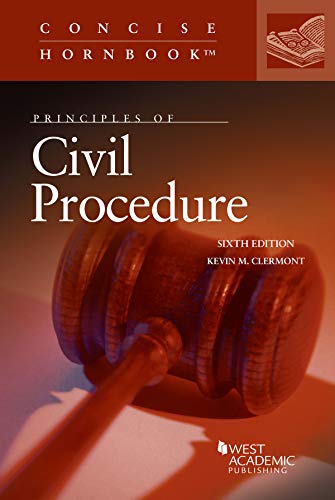
West Academic
Principles of Civil Procedure (Concise Hornbook Series)
Buy from $62.30
1 condition -

West Academic
Principles of Federal Jurisdiction (Concise Hornbook Series)
Buy from $62.30
1 condition -
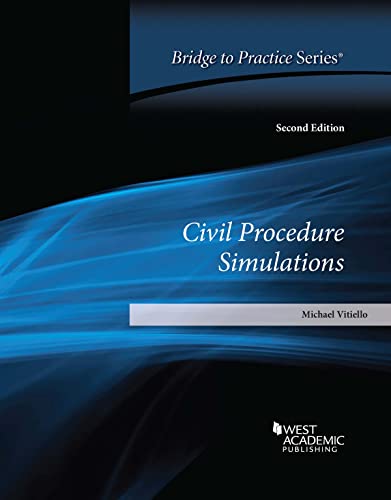
West Academic
Civil Procedure Simulations: Bridge to Practice
Buy from $32.59
1 condition -
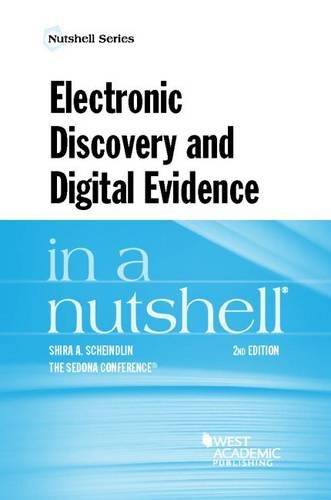
West Academic
Electronic Discovery and Digital Evidence in a Nutshell (Nu…
Buy from $55.59
1 condition -

West Academic
Civil Procedure: Cases and Materials, Thirteenth Edition, F…
Rent from $159.99
Buy from $239.99
3 conditions -
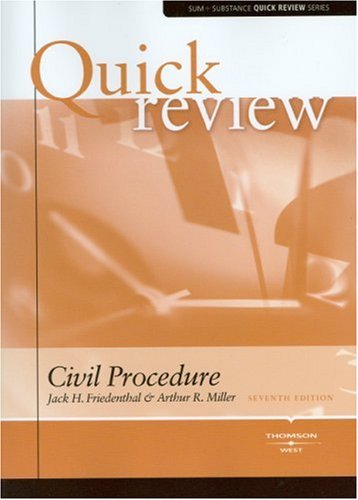
West Academic
Sum and Substance Quick Review on Civil Procedure (Quick Re…
Buy from $50.80
1 condition