
Uncategorized
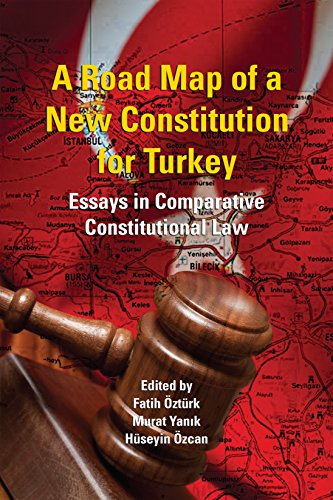
A Road Map of a New Constitution for Turkey: Essays in Comparative Constitutional Law
Product details
Description
Product Description In the last twenty years, the making of constitutions has gained considerable momentum in countries that have transitioned away from colonialist or communist regimes. Even though this new constitutionalism movement has been received favorably for the most part, some political scientists and lawyers approach these activities with suspicion and skepticism. One of these individuals, and perhaps the most important, is Ran Hirschl. He argues that it is inaccurate to claim that establishing judicial review and constitutionalizing rights will have benefits such as a fair redistribution of social reforms and a balance of power. The new constitutionalism activities, Hirschl believes, are a strategic product of homogenous political elites, along with their associated economic interest groups and judiciary directors. This coalition, concerned only with themselves, is made up of people who are the decision makers when constitutional reforms take place, and who decide on the overall scope and structure of those reforms. Many examples of this can be given from the constitutional implementations in Turkey, including the review of constitutional changes based on principle, the shutting down of political parties, privatization or the unbreakable system of guardianship, and statutes made by legal or constitutional reforms related to religious freedoms and the liberty of conscience.When a new constitution is made, it must include input from a wide range of society, and should not simply be the work of that society's elites. Otherwise, even if it's drafted within a legitimate political system, the constitution will not be an effective long-term solution. In this regard we believe it is crucially important to examine the constitution-making processes of Kenya and South Africa, as well as other constitutional issues from around the world. Our hope is that the new civil constitution being prepared in Turkey will be constructed based on a model that allows for public input both during and after the constitution-making period. About the Author Fatih Öztürk is a member of the Faculty of Law at Istanbul University.Murat Yanik is a member of the Faculty of Law at Istanbul University.Hüseyin Özcan is a member of the Faculty of Law at Istanbul University.
Details
- ISBN
- 9781611636499
- Publisher
- Carolina Academic Press
- Publication Date
- October 2023
Condition Guide
Every FrugalText book is graded by our receiving team before it ships. Conditions describe cosmetic state only - content is identical across tiers.
-
Acceptable
Readable throughout. Expect highlighting, margin notes, and wear on cover or spine. Best price for the same page numbers.
-
Good
Minor highlighting or notes. All pages intact. Cover shows light shelf wear.
-
Very Good
Little to no writing. Binding tight. Looks barely used.
-
Brand New
Unused and unmarked. Shrinkwrapped when available from the publisher.
-
Brand New + eBook
Brand new print copy plus the publisher's eBook and supplemental digital access, where offered.
Shipping & Returns
-
Fast, standard shipping
Most students receive their books in 3 to 9 business days.
-
Rental returns: free at semester's end, prorated if early
Print a prepaid return label from your account whenever you have finished with the book, and drop it at the carrier listed on the label. Returning it by your semester return date, or after it is already overdue, is free with no deduction. Returning it early, before that date, deducts a 15% restocking fee and the label cost from your refund.
-
Purchase returns: 15% restocking fee
Purchases can be returned within 30 days in the condition you received. We will email a prepaid return label; once we receive your book, we refund the purchase price minus the 15% restocking fee and the return label cost. Original shipping is non-refundable.
-
Shipping costs calculated at checkout
Real-time rates are quoted at checkout based on your address and the books in your cart. Returning your book by your semester date is always free; an early return deducts the restocking fee and label cost from your refund instead.
You might also need
Students also rent these.
-

American Bar Association
Tax Increment Financing
Buy from $73.55
1 condition -

American Bar Association
The American Bar Association's Legal Guide to Independent F…
Buy from $45.95
1 condition -

American Bar Association
The Tech Contracts Handbook: Software Licenses and Technolo…
Buy from $32.15
1 condition -

American Bar Association
How to Build and Manage a Personal Injury Practice
Buy from $64.35
1 condition -

American Bar Association
The Attorney-Client Privilege and the Work-Product Doctrine…
Buy from $179.40
1 condition -

American Bar Association
Navigating Emotional Currents in Collaborative Divorce: A G…
Buy from $64.35
1 condition