
Uncategorized
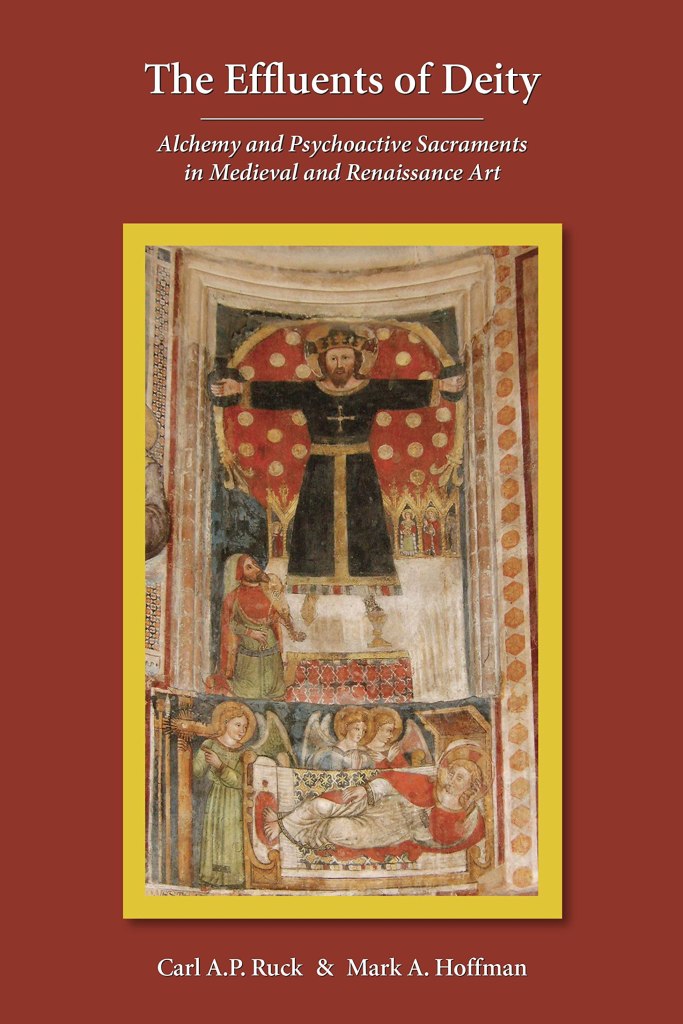
The Effluents of Deity: Alchemy and Psychoactive Sacraments in Medieval and Renaissance Art
Product details
Description
The prime doctrine of alchemy was that what was above mirrored what was below. From this it follows that manipulating what was below could exert a profound influence upon the realm above.
Alchemy was a dual process in which physical and chemical or metallurgical changes had a parallel spiritual aspect, both personal and cosmic, so that the transformations occurred also within the retort of the body of the practitioners of the art, who sought to transmute leaden consciousness to celestial transcendence and perhaps even manage to move the stars. What flowed from the body of the deity, as an alchemical vessel, was a magical sacrament offering mystical communion with its divine source.
The main focus of this study is van Eyck's Ghent Altarpiece known as the 'Mystic Lamb.' It was intended as a complex talisman to influence the ascendancy of Burgundy and the coronation of its Duke, Philip the Good, as the Pope's choice to rule over the New Jerusalem of John's Apocalyptic Revelation. Its completion coincided with the Duke's inauguration of the elite chivalric Order of the Golden Fleece. The river of the alchemical aqua vitae that flows from the throne of God and the Lamb in the Altarpiece encodes the secret of their psychoactive initiatory Eucharist.
The context for van Eyck's masterpiece includes the visionary scholarship of the Jewish Cabbala and medieval Christian mystics, Chrétien de Troyes' Conte du Graal, and such other artistic masterpieces as St. Berward's Michaeliskirke, Filippo Lippi's series of Adorations painted for his Medici patron's, and Petrus Christus' paintings for the Order of the Dry Tree, as well as other works of van Eyck and his contemporaries that were intended to serve as aids for mystical meditation.
A final chapter examines the nature of the Eucharist at the time John's Revelation.
A DVD is included in the book.
Details
- ISBN
- 9781611630411
- Publisher
- Carolina Academic Press
- Publication Date
- October 2023
Condition Guide
Every FrugalText book is graded by our receiving team before it ships. Conditions describe cosmetic state only - content is identical across tiers.
-
Acceptable
Readable throughout. Expect highlighting, margin notes, and wear on cover or spine. Best price for the same page numbers.
-
Good
Minor highlighting or notes. All pages intact. Cover shows light shelf wear.
-
Very Good
Little to no writing. Binding tight. Looks barely used.
-
Brand New
Unused and unmarked. Shrinkwrapped when available from the publisher.
-
Brand New + eBook
Brand new print copy plus the publisher's eBook and supplemental digital access, where offered.
Shipping & Returns
-
Fast, standard shipping
Most students receive their books in 3 to 9 business days.
-
Rental returns: free at semester's end, prorated if early
Print a prepaid return label from your account whenever you have finished with the book, and drop it at the carrier listed on the label. Returning it by your semester return date, or after it is already overdue, is free with no deduction. Returning it early, before that date, deducts a 15% restocking fee and the label cost from your refund.
-
Purchase returns: 15% restocking fee
Purchases can be returned within 30 days in the condition you received. We will email a prepaid return label; once we receive your book, we refund the purchase price minus the 15% restocking fee and the return label cost. Original shipping is non-refundable.
-
Shipping costs calculated at checkout
Real-time rates are quoted at checkout based on your address and the books in your cart. Returning your book by your semester date is always free; an early return deducts the restocking fee and label cost from your refund instead.
You might also need
Students also rent these.
-

American Bar Association
Green Building and Sustainable Development: The Practical L…
Buy from $165.55
1 condition -

American Bar Association
Truck Accident Litigation, Third Edition
Buy from $137.95
1 condition -

American Bar Association
Leapholes
Buy from $14.67
1 condition -

American Bar Association
Garner on Language and Writing
Buy from $55.15
1 condition -
American Bar Association
Minding Your Own Business: The Solo and Small Firm Lawyer's…
Buy from $115.00
1 condition -

American Bar Association
The Attorney-Client Privilege and the Work-Product Doctrine…
Buy from $179.40
1 condition